Understanding the Connection Between Dental Restorations and Oral Health
The decision to enhance one’s smile with veneers Balwyn involves more than aesthetic considerations. Whilst many people focus on the visible transformation these thin shells provide, fewer consider the subtle ways in which veneers interact with the body’s natural oral environment. The mouth operates as a complex ecosystem where saliva flow and bacterial populations maintain a delicate equilibrium, and any alteration to tooth surfaces can influence this balance in surprising ways.
Dental professionals have long recognised that the materials and structures placed within the oral cavity can affect more than just appearance. When porcelain or composite veneers are bonded to tooth surfaces, they introduce new textures, contours, and materials that the mouth must adapt to. This adaptation process involves changes in how saliva moves across tooth surfaces, how bacteria colonise different areas, and how the oral microbiome responds to these modifications.
The Role of Saliva in Maintaining Oral Health
Saliva serves numerous functions beyond simply keeping the mouth moist. This remarkable fluid acts as the first line of defence against harmful bacteria, neutralises acids that can damage tooth enamel, and facilitates the remineralisation process that keeps teeth strong. According to research on salivary function and oral health, adequate saliva production is fundamental to maintaining a healthy oral environment.
The composition of saliva includes enzymes, proteins, minerals, and antibodies that work together to regulate bacterial growth and protect oral tissues. When saliva flow becomes disrupted or altered, the consequences can extend throughout the entire oral cavity, potentially affecting everything from breath freshness to cavity risk.
How Veneers Alter the Oral Landscape
Changes in Surface Texture and Contour
When considering treatments such as veneers Balwyn dental practices offer, it’s worth understanding how these restorations modify tooth surfaces. Natural tooth enamel possesses a unique texture with microscopic ridges and valleys that have evolved to interact optimally with saliva. Veneers, whilst designed to mimic natural teeth, present a different surface characteristic that can influence how saliva spreads and flows across teeth.
The smoothness of porcelain veneers, whilst aesthetically pleasing, can affect the adherence of the salivary pellicle—a thin protein film that naturally coats teeth. This pellicle plays a crucial role in protecting enamel and influencing which bacteria can successfully colonise tooth surfaces. The altered surface properties may change how quickly saliva drains from certain areas, potentially creating microenvironments where bacterial populations differ from those on natural tooth surfaces.
Impact on Salivary Flow Patterns
The placement of veneers can subtly modify the contours of teeth, which in turn affects how saliva circulates throughout the mouth. These restorations may create slightly different spaces between teeth or alter the angle at which tooth surfaces meet the gums. Such modifications can influence salivary pooling and drainage, particularly in the areas between teeth where bacteria tend to accumulate.
Understanding the relationship between oral structures and salivary function helps explain why some individuals experience a brief adjustment period after receiving veneers. The mouth’s sensory receptors detect these new surfaces and may temporarily alter saliva production as the body adapts to the changes.
The Oral Microbiome and Dental Restorations
The human mouth harbours hundreds of bacterial species, most of which play beneficial or neutral roles in oral health. This microbial community, known as the oral microbiome, exists in a state of dynamic balance. When veneers are introduced, they provide new surfaces for bacterial colonisation, and the composition of bacterial communities may shift in response to the different materials and surface properties.
Studies examining the interaction between dental materials and oral bacteria have revealed that different restorative materials can harbour distinct bacterial populations. Whilst modern veneers are designed to resist bacterial adhesion, the transition zones where veneers meet natural tooth structure require particular attention to maintain optimal oral hygiene.
Maintaining Oral Balance with Veneers
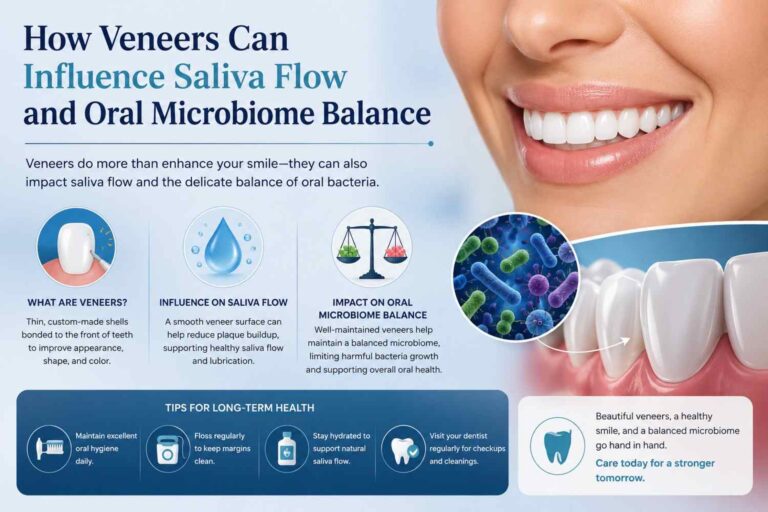
Individuals who choose veneers can support their oral microbiome and saliva flow through consistent oral hygiene practices and regular dental visits. Proper cleaning techniques ensure that bacterial populations remain balanced, whilst adequate hydration supports healthy saliva production. The adaptation period following veneer placement typically resolves as the oral environment establishes a new equilibrium, demonstrating the mouth’s remarkable capacity to accommodate changes whilst maintaining overall health.
Any surgical or invasive procedure carries risks. Before proceeding you should seek a second opinion from an appropriately qualified health practitioner.